Land and Water
Land Back in Plain Terms
In August 2011 a federal judge in South Dakota threw out a lawsuit by tribal members who wanted their shares of the money awarded for the Black Hills. Judge Lawrence L. Piersol ended with a plain statement of where things stand: “If there is to be any result other than the current stalemate, then it must come from tribal government and the Congress of the United States.” In the Black Hills, Land Back is the call for federal land there to go back to the tribes. This page separates the legal claim, the money and the political ask, and covers who asks for what, what a return would take and what has changed. The history is on The 1980 Ruling and Land Back.
Three Things That Get Mixed Up
The legal claim is closed. On June 30, 1980, the Supreme Court held that the 1877 Act, which took the Black Hills, was a taking of tribal property that the United States had to pay for: $17.1 million, the land’s value in 1877, plus 5 percent a year in interest. The Court did not call the taking illegal and ordered no land returned, and federal courts treat the claim as settled by that award.
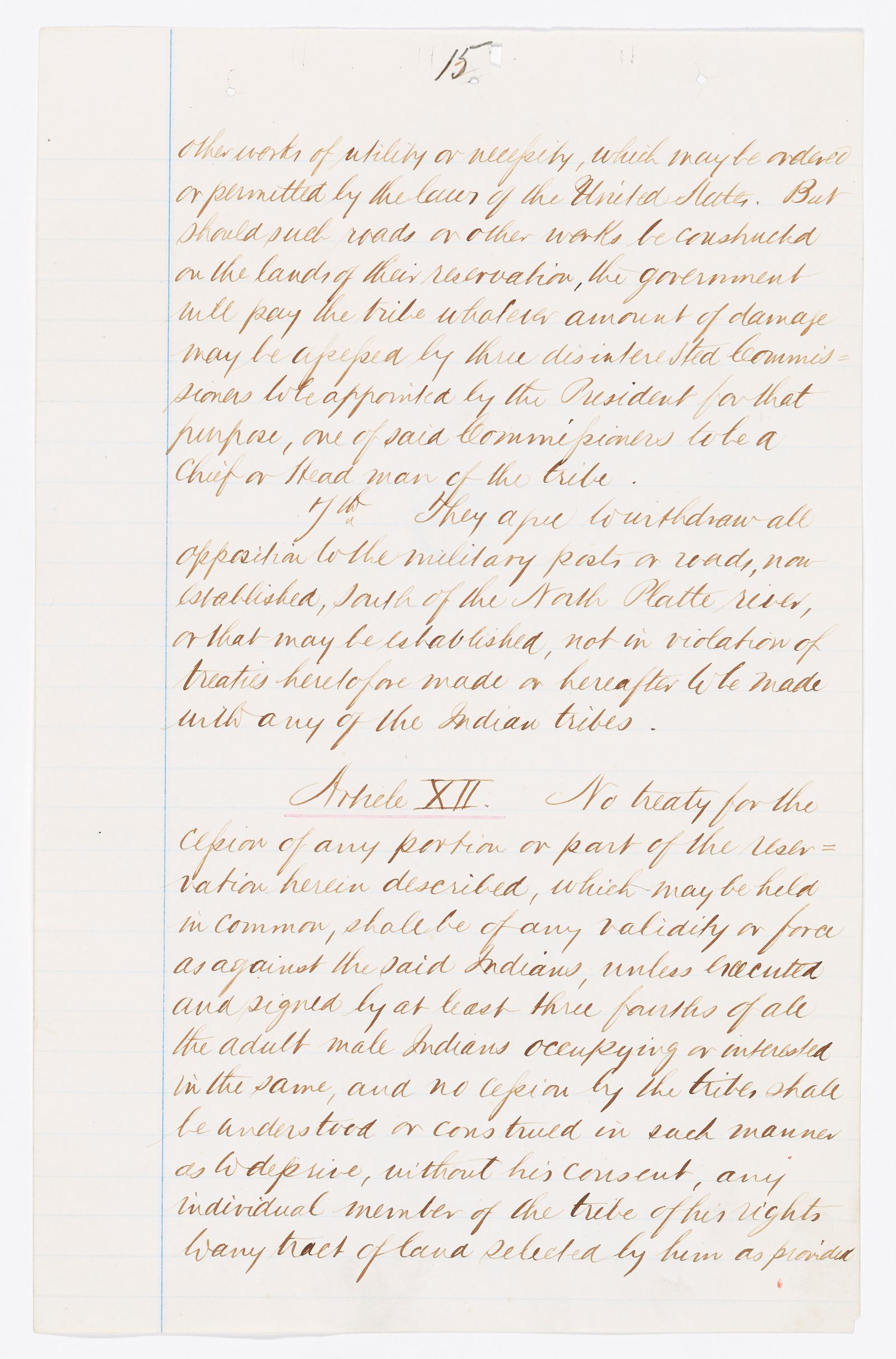
The record behind it is brief. Article XII of the 1868 treaty voided any cession of reservation land not signed by at least three-fourths of the adult men. In August 1876 Congress barred further money for the tribes’ food unless they first gave up the Hills and their hunting grounds outside the reservation. The cession was put only to chiefs and headmen, and “it was signed by only 10% of the adult male Sioux population,” the Supreme Court found. Congress enacted it anyway. The full account is on The 1876 War and the Taking of the Hills.
The money is separate. With interest, the award came to $105,994,430.52, which the Interior Department holds in trust. As of 2025 the balance had never been made public; PBS NewsHour reported in 2011 that it had grown well beyond $1 billion. The tribes refuse it, holding that accepting it would end their claim to the land. In 2025 Oglala Sioux Tribe President Frank Star Comes Out repeated their answer: “The Black Hills Are Not For Sale.”
The political ask is the third thing: a law from Congress giving federal land in the Hills back. No court can order it.
Who Asks for What
The claim belongs to the tribes as nations, not to individual members, the 2011 court held, so the tribal governments come first.
| Who | What they ask for |
|---|---|
| Tribal governments | No sale of the Hills; the 1980 money refused. By June 2026, NDN Collective reported, all nine tribes in South Dakota had passed resolutions backing work on a land-return bill. |
| The draft He Sapa Restoration Act, from tribal councils, treaty councils and elders | Federal land returned to the Seven Council Fires, the Očhéthi Šakówiŋ, and protected from mining; the 1868 treaty claims left open; private land untouched. |
| NDN Collective’s LANDBACK campaign | All public land in the Black Hills returned to the Lakota. |
| National Congress of American Indians, a body of tribal governments (2020) | A presidential commission with tribal leaders to write a land-return proposal by mutual consent; an immediate start on returning unoccupied federal land the agencies don’t need; tribal management of the Black Elk Wilderness and Wind Cave. |
| Sicangu Treaty Council | Declined to back the draft: the Fort Laramie treaties govern, and only a new treaty can change them. |
| Tribal members who sued | Their shares of the money; dismissed in 2011 as an internal tribal matter. |
The Standing Rock Sioux Tribe’s council and the Oglala Sioux Tribe backed the draft in 2024, ICT reported. Philimon Two Eagle, the Sicangu Treaty Council’s executive director, warned that Congress would rewrite any bill, and said true justice would be for settlers to leave the treaty lands. “There is no such thing as land back,” he said.
Does Land Back Mean Taking Private Land?
No current proposal reaches private land. The draft “does not involve privately owned lands,” NDN Collective said in June 2026; private parcels would be listed in the land survey but stay with their owners, ICT reported in 2024. NDN’s campaign asks for public land, and the Bradley bill of the 1980s aimed only at the federally owned parts of the Hills. Two Eagle’s words about settlers describe justice as he sees it, not a bill. Objections to earlier bills, from state officials and Black Hills towns, are on the history page.
What Would It Take?
An act of Congress. The Constitution gives Congress the “Power to dispose of” property belonging to the United States, and a bill becomes law only after both houses pass it and it goes to the President.
It would also take one proposal the tribes agree on. The claim is shared: the case behind the 1980 award was brought in 1950 by eight tribes acting for the whole nation. By 2011 President Barack Obama had offered to meet the tribes if they first agreed on a single proposal for Congress, PBS NewsHour reported. As of June 2026, NDN Collective reported, the tribes in South Dakota had backed the drafting, but the Great Sioux Nation also takes in tribes in North Dakota and Nebraska, and the bill was still in early draft, with no sponsor named.
Smaller Steps Already Taken
Some things have changed without Congress. None of them hands back national forest.
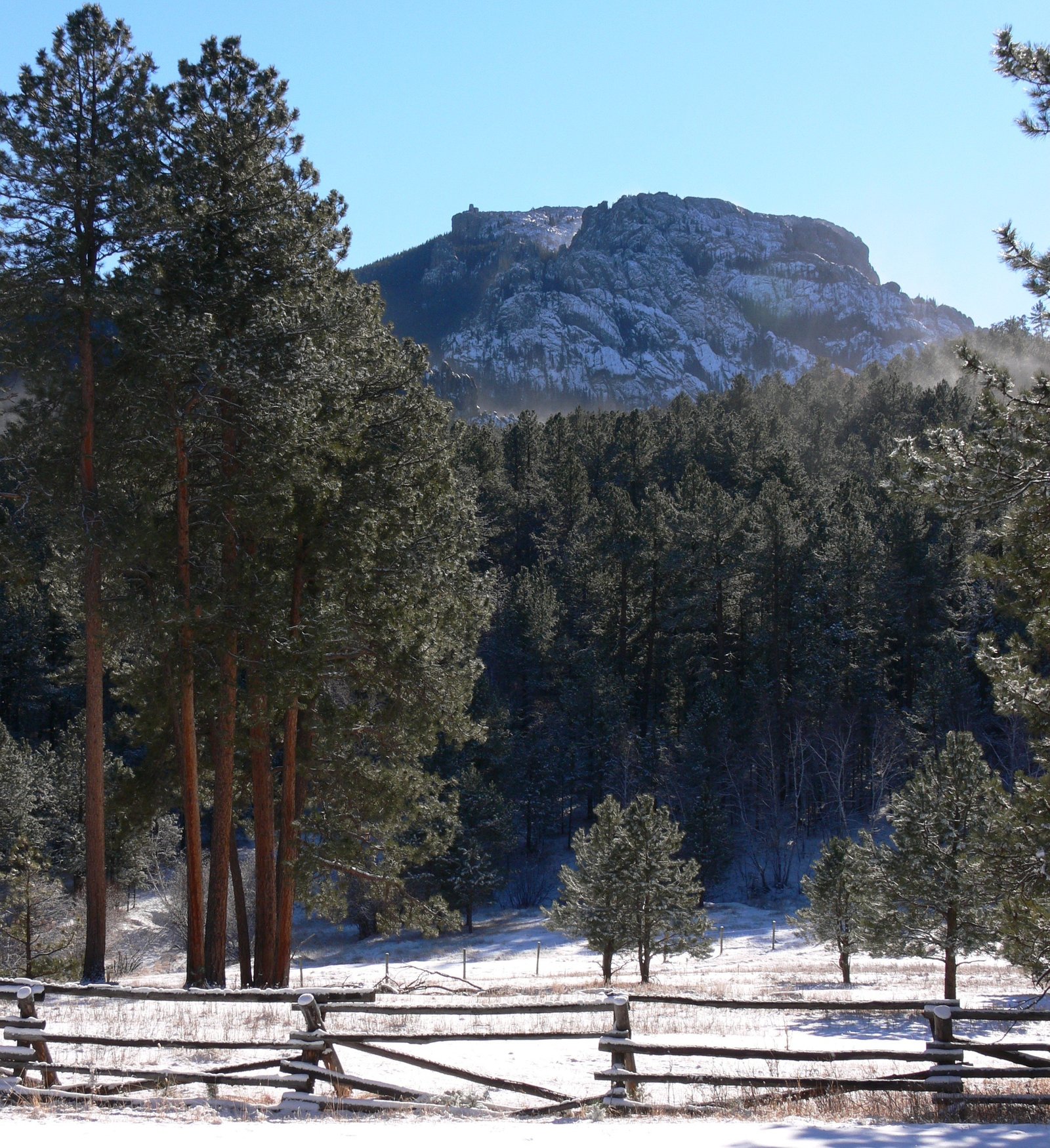
In August 2016 the U.S. Board on Geographic Names renamed the highest point in South Dakota for Black Elk, the Oglala Lakota holy man: Black Elk Peak (called Harney Peak until 2016). The old name honored William S. Harney, the Army general whose troops attacked tribal members at Blue Water Creek, Nebraska, in 1855.
In 2012 the Rosebud Sioux Tribe, the Shakopee Mdewakanton Sioux Community, the Standing Rock Sioux Tribe and the Crow Creek Sioux Tribe raised about $9 million and bought land on Reynolds Prairie, which the Lakota call Pe’ Sla. They asked Interior to hold it in trust, so their access would be permanent and the land never sold off. Pennington County did not object; the state appealed. On December 2, 2016, Interior upheld trust status for 2,022.66 acres.
Public Land Order 7956, which took effect on December 27, 2024, closed 20,510 acres of national forest around Pactola Reservoir to new mining claims and mineral leasing for 20 years, subject to valid existing rights, to protect the water supply of Rapid City and Ellsworth Air Force Base. Interior said it answered requests from tribes and the local community. More is on Gold, Lithium and the New Mining Rush.
Joint Secretarial Order 3403, signed on November 15, 2021, told the Interior and Agriculture departments to make co-stewardship agreements, sharing the care of federal land with tribes. On August 22, 2024, eight tribes, by the Standing Rock Sioux Tribe’s count, signed a co-stewardship memorandum with the Black Hills National Forest that gives them a place in forest planning. On March 19, 2026, the Forest Service and 11 tribes of the Great Sioux Nation signed an agreement for the 13,534-acre Black Elk Wilderness, one of the places named in the 2020 request above. It is still national forest.
Has Congress Ever Given Land Back?
Yes, elsewhere. Taos Pueblo in New Mexico lost land including Blue Lake in 1906, by the pueblo’s own account. On December 15, 1970, Congress put about 48,000 acres of the Carson National Forest watershed in trust for the pueblo, for traditional uses only, to “remain forever wild.” The law also told the Indian Claims Commission to decide how far the land’s value should count against the pueblo’s money claims.
On January 3, 1975, in the law that enlarged Grand Canyon National Park, Congress put about 185,000 acres in trust for the Havasupai Tribe, for traditional uses and grazing. Each law dealt with one tribe and one mapped tract.
Where the Decisions Sit
Congress decides whether federal land goes back. The tribal governments decide what the tribes ask for and whether the money is touched; when members disagree, the 2011 court said, that is for each tribe to settle. Interior’s Bureau of Trust Funds Administration holds the money. The Black Hills National Forest, run from Custer, works with 16 tribes. How each hears from the public is on Who Decides, and How to Be Heard.
In 2025 the councils of the Oglala Sioux Tribe and the Standing Rock Sioux Tribe had a consultation request before Interior Secretary Doug Burgum, and Star Comes Out said the tribes were open to nation-to-nation talks that would settle the land claims without selling their homelands.
Connected
- The 1980 Ruling and Land BackThe history: the ruling, the refused money, the Bradley bill and the campaigns since.
- The Fort Laramie Treaties of 1851 and 1868The treaty that set the Hills aside, and its consent rule.
- The 1876 War and the Taking of the HillsThe war, the food law and the 1877 Act.
- Gold, a Broken Treaty and Land BackThe chain from Custer’s gold to the claim today.
- Who Decides, and How to Be HeardThe bodies behind each decision and how they take comments.
- Where This Site StandsThe site’s four positions in one place.
- Gold, Lithium and the New Mining RushThe Pactola withdrawal and the mining claims around it.
- Hiking Black Elk PeakThe peak renamed in 2016.
Local organizations
- NDN Collective, which describes itself as “an Indigenous-led organization dedicated to building Indigenous power.”
Further reading
- Eight Oceti Sakowin Leaders Sign Memorandum of Understanding, Standing Rock Sioux Tribe
- Sacred Site Pe’ Sla Gains Indian Land Status, Shakopee Mdewakanton Sioux Community
- Resolution PDX-20-019: Seeking Presidential Action to Achieve Justice and Reconciliation with Respect to Sacred Places in Indian Country, National Congress of American Indians
- He Sapa LANDBACK, NDN Collective
Sources
- Different Horse v. Salazar, No. CIV 09-4049, Memorandum Opinion and Order. U.S. District Court for the District of South Dakota, 2011 (National Indian Law Library).
- United States v. Sioux Nation of Indians, 448 U.S. 371. Supreme Court of the United States, 1980 (Legal Information Institute, Cornell Law School).
- Black Hills still not for sale, Oglala Sioux Tribe rejects FOIA request to unseal value. Talli Nauman, Buffalo’s Fire, published by ICT, 2025.
- Why the Sioux Are Refusing $1.3 Billion. PBS NewsHour, 2011.
- All Nine South Dakota Tribes Pass Resolutions Supporting Developing Legislation to Return Federal Lands. NDN Collective, 2026.
- Native leaders draft bill to regain some of sacred Black Hills. Amelia Schafer, ICT, 2024.
- He Sapa LANDBACK. NDN Collective.
- Resolution PDX-20-019: Seeking Presidential Action to Achieve Justice and Reconciliation with Respect to Sacred Places in Indian Country. National Congress of American Indians, 2020.
- The Constitution of the United States: A Transcription. National Archives.
- U.S. Forest Service and Great Sioux Nation forge historic co-stewardship agreement for Black Elk Wilderness. USDA Forest Service, 2026.
- Tribal Relations. Black Hills National Forest, USDA Forest Service.
- Harney Peak name changed, governor responds. SDPB, 2016.
- Sacred Site Pe’ Sla Gains Indian Land Status. Shakopee Mdewakanton Sioux Community, 2016.
- Lakota land returns to trust status. Jim Kent, SDPB, 2016.
- State of South Dakota v. Great Plains Regional Director, Bureau of Indian Affairs (Pe’Sla Property): Decision. Principal Deputy Assistant Secretary, Indian Affairs, U.S. Department of the Interior, 2016 (copy posted by Turtle Talk).
- Tribes win federal trust status for Pe Sla property in Black Hills. Stewart Huntington, KOTA, 2017.
- Public Land Order No. 7956; Withdrawal of Pactola Reservoir–Rapid Creek Watershed; South Dakota. Bureau of Land Management, Federal Register 89: 105625, 2024.
- Biden-Harris Administration Finalizes Protections for the Pactola Reservoir–Rapid Creek Watershed. U.S. Department of the Interior, 2024.
- Order No. 3403: Joint Secretarial Order on Fulfilling the Trust Responsibility to Indian Tribes in the Stewardship of Federal Lands and Waters. Secretaries of the Interior and Agriculture, 2021.
- Eight Oceti Sakowin Leaders Sign Memorandum of Understanding. Standing Rock Sioux Tribe, 2024.
- The Return of Blue Lake. Taos Pueblo.
- Public Law 91-550, 84 Stat. 1437 (the Blue Lake act). U.S. Congress, 1970 (Government Publishing Office).
- Public Law 93-620, 88 Stat. 2089 (the Grand Canyon National Park Enlargement Act). U.S. Congress, 1975 (Government Publishing Office).
Last reviewed: